From Pastures to Power: Empowering Herder Women in Mongolia

An IKI Small Grants project empowered Mongolian herders – especially women – on sustainable livestock and climate adaptation and was honored with the Energy Globe Award for the project.

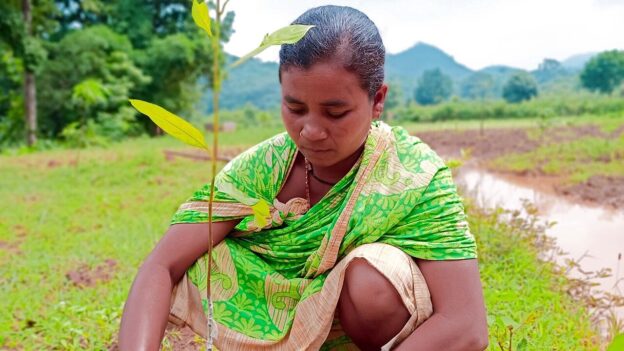
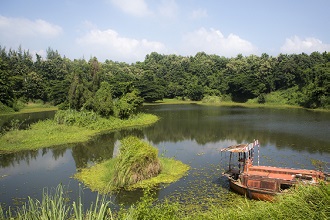
Arkhangai province, located in central Mongolia, is characterised by a diverse natural landscape with rugged terrain and high peaks. Its numerous rivers and lakes contribute to the region’s lush greenery and fertile valleys. For local communities, the picturesque landscape is also a key source of income: a large share work as herders, producing goods such as dairy products and cashmere wool.

However, Mongolia faces serious climate-related challenges that undermine the livelihoods of herders. These include frequent natural disasters and desertification. Increasing livestock numbers accelerate land degradation. A project by the local non-governmental organisation Mongolian Women’s Fund (MONES) addressed these challenges with a special focus on supporting women herders. They are adapting their livestock practices to better cope with climate change challenges and to safeguard their income base. Sustainable pastoralism contributes to the conservation of the Mongolian steppe, one of the largest remaining grassland ecosystems.

Sustainable herding to strengthen incomes and environment

Supported by the IKI Small Grants programme, the organisation trained herders on sustainable livestock management, animal welfare, and responsible cashmere production to enhance their knowledge, leadership capabilities, and climate adaptation skills. By improving productivity, securing more stable income sources and focusing on livestock quality over quantity, the project reduces vulnerability to climate change while promoting responsible use of natural resources.

Empowering women to lead

The project specifically empowered women to take leadership roles in cooperatives and participate in community decision-making. By supporting women to assume leadership positions, this approach helps them achieve greater financial independence while building resilience to climate change. Of the 351 herders trained, 185 were women.

Participating herders applied animal-friendly, hygienic standards and improved the quality and yield of livestock products. Two cooperatives – comprising 103 households – earned the “Responsible Nomads” certification, enabling them to establish direct supply agreements with major national companies.

International recognition for local action

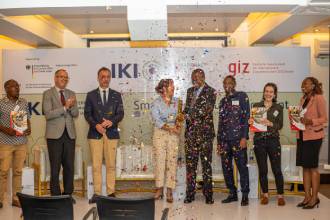
The impactful work on local climate change adaptation has already been recognised internationally. In 2025, MONES was awarded by an international jury of energy and environmental experts with the Energy Globe National Award Mongolia for their climate action project. Established in 1999, the Energy Globe Award highlights and recognises projects focused on sustainable and innovative solutions to global environmental challenges.

Project video

About the project

Rural Women Leading Climate Actions | IKI Small Grants

About IKI Small Grants

IKI Small Grants, implemented by the German federal enterprise Deutsche Gesellschaft für Internationale Zusammenarbeit (GIZ), funds local actors which are the driving force for change and essential for effective climate and biodiversity action worldwide. The programme is part of the International Climate Initiative (IKI), which is commissioned by the Federal Ministry for the Environment, Climate Action, Nature Conservation and Nuclear Safety (BMUKN). IKI Small Grants fosters bottom-up solutions while strengthening capacities of local actors.

Canada and Germany join forces with Nigeria to support local women entrepreneurs

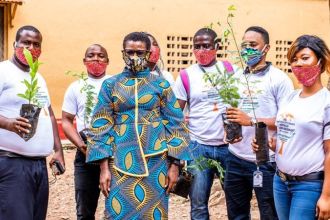
Global Affairs Canada (GAC), the Development Bank of Nigeria (DBN), and Germany’s International Climate Initiative (IKI) are partnering to make climate and biodiversity financing available for women-led businesses in Nigeria. 

With Canada committing 5 million Canadian dollars – which equals 3.4 million euros – in co-financing, the cooperation builds on the IKI Small Grants “Funding the Funders” approach, enabling local actors to access climate and biodiversity financing through funding institutions in partner countries. With Canada’s financial contribution and Germany’s technical support through the IKI Small Grants programme, the initiative will run until August 2029, allowing the Development Bank of Nigeria to establish a funding programme across the country. The state-owned bank will provide small grants and targeted trainings to women-led micro, small and medium enterprises.

These measures are intended to ensure that companies contribute to climate and biodiversity protection with their products or services, reduce their carbon emissions, and better manage the impacts of climate change. The collaboration aims to reach 5,000 businesses, resulting in approximately 25,000 indirect beneficiaries, including community members. All 5,000 enterprises will receive capacity development, and the 240 most promising ones will be selected for additional seed funding to further enhance their businesses.

The focus is on rural regions, where women in particular are struggling with the consequences of climate change while lacking access to the funds needed to address local effects. For DBN’s managing director, Dr. Tony Okpanachi, achieving social impact through funding is one of the bank’s main objectives.

Dr. Tony Okpanachi is managing director of the DBN.

Bringing funding to local women entrepreneurs

“This partnership with Global Affairs Canada and IKI Small Grants allows us to reach women entrepreneurs who face barriers to accessing climate financing in Nigeria,” says Theresa Lawal, Head of Product Development & Strategic Alliances at DBN. Through the co-financing from Canada, Germany’s IKI Small Grants can support DBN in providing grants for women-led micro, small or medium enterprises – putting them in a better position to adapt to impacts of climate change while growing their business and contributing to the economy. 

“Imagine a woman running an off-grid business adopting solar solutions, or a smallholder farmer transitioning to climate-smart agriculture,” Theresa Lawal describes the target group. “Women in Nigeria receive less than 20% of available funding. This programme will increase financial inclusion, enhance women’s contribution to climate action, and improve their ability to adapt to climate change.”

Theresa Lawal is Head of Product Development and Strategic Alliances at DBN.

Fostering local impact through global partnerships

For Global Affairs Canada, the significance of the initiative lies in its commitment to gender equality, climate action, and economic empowerment in Africa. Arash Irantalab, Head of Development Cooperation at the High Commission of Canada in Nigeria emphasises, “Canada works with African partners by increasing mutually beneficial economic opportunities and advancing key priorities on the international stage to address global challenges, including climate change.” 

The decision to work with IKI Small Grants was based on the requirement “to partner with an initiative that has proven to be effective and successful – thus building on global partnerships for better results in local development.”

Arash Irantalab works at the High Commission of Canada in Nigeria.

Localising access to empower community-led climate and biodiversity action

As various international agreements state, local climate and biodiversity action is essential for global transformation. As one of its financing mechanisms, IKI Small Grants funds national or regional institutions that channel small grants directly to local actors. Simply put, IKI Small Grants “funds the funders”. 

Working with Canadian co-financing channelled through IKI Small Grants, the Development Bank of Nigeria can plan and run a national funding programme, choose the recipients of the small grants and process payouts, while addressing them in their local language and lowering the administrative hurdles for accessing climate financing.

David Fuchs is programme director at IKI Small Grants.

About the project

This project is co-financed by Global Affairs Canada and implemented within the IKI Small Grants programme strengthening local solutions for effective climate and biodiversity action. IKI Small Grants is funded by the Federal Ministry for the Environment, Climate Action, Nature Conservation and Nuclear Safety and run by Deutsche Gesellschaft für Internationale Zusammenarbeit (GIZ) GmbH. It is part of Germany‘s International Climate Initiative (IKI).

More info: Boosting Leadership in Climate Action Amongst Nigeria’s Female Entrepreneurs | IKI Small Grants

Find out more about the Funding the Funders approach in this video:

More about the project:

Ecuadorian students planting new plants.

Inspiring Youth to Protect Biodiversity in Ecuador

Students planting new plants

With support from the International Climate Initiative, Ecuador’s National Institute of Biodiversity (INABIO) worked with 13 pilot schools around the country to create hands-on biodiversity education rooted in local ecosystems. 

What began as a small-scale initiative has now reached over 1,000 schools nationwide through integration into Ecuador’s national curriculum. The project demonstrates how locally led, context-specific education – when trusted and funded – can start lasting systemic change nationwide.

A project rooted in the classroom

In one of the world’s biodiversity hotspots, a national shift in environmental education is underway. With support from IKI Small Grants, Ecuador’s Instituto Nacional de Biodiversidad (INABIO) helped pioneer a new approach to teaching biodiversity – one that now reaches schools across the country. It began with just thirteen schools. Through a pilot project, INABIO – supported by IKI Small Grants – set out to integrate biodiversity, climate change, and resource management into students’ everyday learning. But instead of arriving with a ready-made curriculum, they started with observation. “We didn’t arrive with a solution,” says Diego Inclán, Director of INABIO. “We arrived to the schools and learned from the community at the first stage. I mean the teachers, the kids, and the parents. We got the perception of what they feel, what they need – and then we developed tools together.”

Learning to see what was always there

The first step was reawakening perception. In many urban schools, biodiversity was something hidden or unfamiliar. INABIO’s team invited students to explore their surroundings, often for the first time. Equipped with smartphones and the iNaturalist app, which is part of a citizen science project for nature observation, children documented spiders, birds, or insects in schoolyards they’d never noticed before. “Some schools are not green at all,” Diego explains. “But we went outside to search for signs of biodiversity. And then they started to realise – there is biodiversity out there, even if it’s hiding.”

As part of the project’s sustainability interventions, each school received an ecological garden and a composting system. Solar benches were set up to encourage the use of renewable energy for powering educational equipment. Additionally, rainwater harvesting systems were introduced to improve water availability in schools with limited access to potable water. In one school, a greenhouse was installed to support its ongoing project aimed at using greenhouse-grown produce to improve students’ nutrition.

Students focused on documenting biodiversity and asking scientific questions about their local ecosystems. “We wanted to connect the story,” Diego says. “You find a spider – what does it mean? What relationship does it have with other animals, with the environment?”

For Emily Lara, who oversaw the technical implementation of the project, integration was key: “We can’t think about biodiversity if we’re not addressing problems with waste, water, or energy. These issues are interconnected. It’s difficult to talk about a bird or a species when the school doesn’t even have clean water.”

Emily Lara from INABIO oversaw the technical implementation of the biodiversity education project supported by IKI Small Grants.

Nationwide impact through the project

The pilot directly involved 13 schools, among them one inclusive school for children with disabilities, and over 8,000 students, teachers, and community members. But the project’s real breakthrough came unexpectedly – through a piece of homework. “One day I was at home,” Diego recalls. “And my daughter, who wasn’t in a pilot school, told me she’d been given homework to document biodiversity. I thought, ‘Wait, that’s our task!’ The Ministry of Education had taken one of our pilot activities and rolled it out to the entire education system.” That moment marked a major milestone. What started as a hands-on pilot had been adopted into Ecuador’s national curriculum. “It was a huge impact,” Diego says. “We didn’t know it was going to happen. But that’s the way to do it – get one activity into the curriculum, and then it repeats again and again.”

For Diego Inclán, Managing Director at INABIO, the support from IKI Small Grants was essential in elevating the project’s impact to a national level.

The power of supporting local institutions

The success of the project lies not only in the fruitful education initiative – it was also structural. For INABIO, this was the first time their work was formally brought into Ecuador’s education system. And that leap wouldn’t have been possible without the support – and trust – of IKI Small Grants. “If I go alone as INABIO with an idea, I probably won’t be heard,” Diego explains. “But when we said that this is part of an IKI Small Grants initiative, it made people listen.” 

The Funding the Funders approach

Mijako Nierenköther, in charge of the funding line for Funding Institutions of the IKI Small Grants programme, says that’s precisely the intention of the “Funding the Funders” model: “We enable local institutions to lead. INABIO didn’t need to be told what to do – they needed trust, flexibility, and legitimacy to scale what they knew would work. That’s what our model supports.”

Emily Lara saw that principle come alive in practice. “It wasn’t just about the funding,” she says. “We were trusted to do it in our own way – and that made all the difference.” IKI Small Grants also supported the institutional strengthening of INABIO through various capacity development measures. These included the design and preparation of a Call for Proposals, the improvement of financial management procedures, and the enhancement of technical skills such as photography and camera handling for nature monitoring purposes. INABIO staff also received training to strengthen overall project management, along with the use of project management software to support these processes. In addition, the members of the institute attended an IKI Small Grants networking workshop to exchange experiences and discuss lessons learned with other funding institutions supported by IKI Small Grants.

Mijako Nierenköther, head of the IKI Small Grants funding line for funding institutions, attributes the success of the ‘Funding the Funders’ approach to the ownership by the funded organisations.

Lessons that travel beyond the schools

One of the project’s most powerful effects has been how it has reached homes and communities. “Kids go home really happy with what they learn,” Emily recalls. “They teach their parents and neighbours. We had one child come back and say, ‘My neighbour is composting now.’ That was really cool.” She was especially moved by the gendered impact. “Some girls didn’t even imagine they could be a biologist or a scientist. But after the workshops, one six-year-old said to me, ‘I will be a scientist once, and I will be like you.’ That was one of the objectives – seeing that change in them.”

A living curriculum, grounded in lived curiosity

For INABIO, the project is only in its first phase. Monitoring and follow-up will continue, but the foundation has been laid. As a public institution, INABIO plans to sustain the work beyond the life of the grant, directly alongside Ecuador’s Ministry of Education. “We believe that if you want to conserve something, you need to know what you want to conserve,” Diego says. “What we’re trying to do is help children recover that surprise – that emotion – when they see something like a spider. That curiosity is where the story begins.”

About IKI Small Grants

KI Small Grants, implemented by the German federal enterprise Deutsche Gesellschaft für Internationale Zusammenarbeit (GIZ), funds local actors which are the driving force for change and essential for effective climate and biodiversity action worldwide. The programme is part of the International Climate Initiative (IKI), which is jointly commissioned by the German Federal Government. IKI Small Grants fosters bottom-up solutions while strengthening capacities of local actors.

You can find details about the Fund the Funders approach in this video:

Solar-powered e-bikes pave the way for sustainable mobility in Namibia

Students learn how to build, maintain and repair e-bikes. © EBIKES4AFRICA

With support from Germany’s IKI Small Grants programme for local climate and biodiversity action, EBIKES4AFRICA is making biking accessible and affordable. 

In Namibia’s capital Windhoek, mobility is an everyday challenge – especially for the underprivileged in the city’s sprawling population. By manufacturing its own brand of solar-powered e-bike, introducing rental options, and partnering with social initiatives, the local enterprise is creating alternatives to traditional transport, specifically geared towards underserved communities.

When Olivia Shililifa gets on her bike to ride out into the countryside around Namibia’s capital Windhoek, cycling is more than an exercise. To her, it’s about making a statement for sustainable mobility to her fellow Namibians. “Cycling is a way forward,” she says. “I don’t ride for myself, I ride for a community, I ride for a nation.” Using her influence as a professional cyclist and athlete, Olivia is committed to putting biking on the map in Namibia. She is doing this together with the social enterprise EBIKES4AFRICA, which makes and provides solar-powered e-bikes – with funding and support from Germany’s IKI Small Grants programme.

Olivia Shililifa was a trainee at EBIKES4AFRICA and is now a professional cycling athlete and an inspiration to riders in Namibia. © EBIKES4AFRICA

From A to B: an everyday challenge

Cycling in Windhoek is rarely seen as a viable mode of transport. In recent years, the city has seen a major population influx from rural areas. The city’s borders have expanded, while infrastructure struggles to keep up. Buses are rare and unreliable, and the cost of driving or using taxis is unaffordable for many. Rugged terrain, steep hills, long distances, and scorching heat make traditional bicycles impractical.

“Transport is a big struggle in Namibia,” explains Marita Walther, co-founder of EBIKES4AFRICA. “People spend up to a third of their income on transport alone. There’s a great need to introduce a more cost-effective solution.” The e-bikes her company makes are designed to meet this need. “Riding traditional bikes is exhausting on the many hills of the city. While 10 or 20% of the population may be fit enough to cycle five kilometres to work, 80% are not, because they are too old or too young. We open up possibilities for people to use bicycles.”

Marita Walther runs EBIKES4AFRICA with a mission to promote solar-charged biking in Windhoek. © EBIKES4AFRICA

Bikes “made in Namibia” for local needs and challenges

EBIKES4AFRICA designs and builds e-bikes tailored to Namibia’s local realities and demands. Like all-terrain jeeps on two wheels, the bikes can handle rough roads while remaining affordable to maintain. Built locally by trained Namibian technicians, they feature steel frames, puncture-proof tyres, and solar-powered charging systems. The bikes are built for a wide range of users — from students and commuters to street vendors and entrepreneurs, the enterprise’s main target groups.

Looking ahead: future impact and future growth

With a current production capacity of 200 e-bikes per year, EBIKES4AFRICA is actively changing the transport landscape in Windhoek. “We selected EBIKES4AFRICA for its contribution to helping Namibia scale climate-smart, socially equal mobility solutions,” says David Fuchs, IKI Small Grants’ programme director. “This is not a one-off donation. It’s part of a growing response and solution to achieve more transport equality, more climate resilience, and more energy independence.”

Affary Mubonenwa is leading the EBIKES4AFRICA project. ©EBIKES4AFRICA

The project now serves as a blueprint for further e-hubs throughout Windhoek and northern Namibia. It’s a living example of how climate solutions can take root at the local level — driven by purpose, community, and opportunity. With more e-bike riders taking to the streets, figures like Olivia – once a trainee, now a national athlete – are championing safe, efficient, and sustainable transport alternatives in a country well suited for change. As she emphasizes, “Namibia is a cycling paradise.”

More about the project

Locally manufactured E-Bikes with rental system for peri-urban communities | IKI Small Grants

About the organisation

EBIKES4AFRICA is a social enterprise that specialises in electric mobility and solar recharge systems. A pioneering project for Namibia and Africa, EBIKES4AFRICA provides electric-assist bicycles. Electric bicycles are the most affordable and efficient way of moving, and because it is supported by an electric motor and battery, significantly increases distance, speed, and ease of travel for better access to vital facilities. As the first to introduce this technology they believe that their products and projects create the opportunity for Windhoek to be on the forefront of future-driven transport development initiatives.

Links

Website EBIKES4AFRICA

Video documentary featuring EBIKES4AFRICA and project trainee Olivia Shililifa

Concrete walls were constructed around selected villages to reduce erosion induced by strong waves. © GIZ

Holding back the floods in Bangladesh

Concrete walls were constructed around selected villages to reduce erosion induced by strong waves. © GIZ

In Bangladesh’s flood-prone Haor region, where flash floods threaten homes and livelihoods each monsoon, a project implemented by national financial institution Palli Karma-Sahayak Foundation (PKSF) supported by Germany’s IKI Small Grants offers communities new tools and knowledge for adapting to the effects of climate change.

Kalpana Devi lives in Jarulia Village in Bangladesh’s Haor Region © PKSF

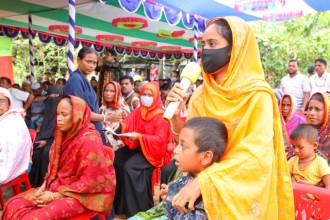
Almost 3,000 residents are experiencing increased security and stability in their everyday lives, thanks to over 1.5 kilometres of flood protection walls, tree buffer zones, and maintenance training. “Before, we lived in panic and anxiety,” says Kalpana Devi from Jarulia Village in Bangladesh’s Haor Region. “We had to build lofts to keep animals safe. We’d carry bamboo and tie up our cows when the floodwater came. It was exhausting, and still nothing ever felt secure.” The region is a unique wetland ecosystem in the northeast of the country, seasonal flooding is a part of life. Locally called Afal, flash floods have a significant effect on the region, one of the country’s four vulnerable climate hotspot areas.

In recent years, climate change has intensified rainfall and erosion of the villages through the afal waves, leaving low-income communities with fewer options and increasingly vulnerable. As more than 70 per cent of houses are made of mud, they are affected by rain and storm waters that damage homes and other buildings. Each year, families like Kalpana’s spend the equivalent of hundreds of euros on flood repairs, relying on temporary solutions like sandbags and bamboo fencing. Each year, the water returns and puts pressure on the villages and villagers once again.

International backing for local purpose

Launched by the Government of Bangladesh in the late 1980s, the Palli Karma-Sahayak Foundation (PKSF) is tasked with financing the country’s development projects as part of its vision to bring an end to poverty. Between 2023-2025, with support from the German government’s IKI Small Grants programme, PKSF ran a pilot project to test long-term, climate-resilient infrastructure in some of the region’s most flood-exposed “hatis” – small, isolated village-islands in the Sunamganj district in the country’s northeast. For PKSF, the project offered a chance to pilot new methods in a region often overlooked. “Our role at PKSF is to bring climate-smart development to places where traditional support doesn’t reach,” says AKM Nuruzzaman, General Manager for Environment and Climate Change at PKSF. 

Remote villages and settlements are exposed to high waters and flooding in Bangladesh's Haor region. © GIZ
Remote villages and settlements are exposed to high waters and flooding in Bangladesh’s Haor region. © GIZ

“The Haor region is difficult to access, but we believed in testing solutions here because the need is real – and so is the community’s resilience.” Partnering with the three local NGOs Thengamara Mahila Sabuj Sangha (TMSS), Friends In Village Development Bangladesh (FIVDB), and Padakhep Manobik Unnayan Kendra (Padakhep), the project involved constructing over 1.5 kilometres of wave-resistant flood retention walls, planting 1,300+ flood-tolerant indigenous trees, and elevating schoolyards and community grounds to serve as safe spaces during floods. “The living space is safe and protected, women like Kalpana can now build and expand their own home,” Nuruzzaman outlines.

New flood walls and open spaces create safe areas for village residents to gather during monsoon season. © GIZ
New flood walls and open spaces create safe areas for village residents to gather in times of flooding during monsoon season. © GIZ

Funding funders to disburse resources in the Haor region

Working with the IKI Small Grants “fund the funder” approach allowed PKSF to select organisations on the ground with deep ties to the local communities. Using this method, IKI Small Grants channels funding and technical support through intermediaries like PKSF in Bangladesh who then identify, finance, and support local organisations and community-based initiatives. Led by PKSF, the advantage of the selection process through the institution lies in the fact that it can engage local organisations for climate and biodiversity action in their own language and context – directly and effectively.

AKM Nuruzzaman is General Manager for Environment and Climate Change at Palli Karma-Sahayak Foundation, Bangladesh's development bank. © GIZ / IKI Small Grants
AKM Nuruzzaman is General Manager for Environment and Climate Change at Palli Karma-Sahayak Foundation © GIZ / IKI Small Grants

This model strengthens local ownership, builds long-term capacity for entities like PKSF, and ensures that climate and biodiversity solutions are suited to their context and can grow and be adopted elsewhere. It’s a strategy that lends partners more responsibility to disburse funds and resources themselves and empowers countries to take the lead in driving their own climate resilience and adaptation. 

Challenging work leading to local ownership

From the outset, the work came with challenges. The three villages are very remote. “Just moving materials to the sites was a major hurdle,” Nuruzzaman recalls. “In dry season, there are no waterways. In rainy season, there’s no dry land to store construction supplies. Technical staff didn’t want to stay in such remote areas. We had to build temporary shelters and work with local labour wherever possible.” To make the impact last, PKSF built the project to ensure ownership could remain local. “If anything goes wrong in the future,” he adds, “the villages can maintain things by themselves – without asking experts from the outside.”

Villages provided labour and can now maintain things by themselves – without asking experts from the outside. © GIZ

Community members contributed labour, received training on maintenance, and participated in climate adaptation workshops. Women especially noted improvements in freedom of movement after dark, when the rains used to inundate living spaces, and sanitation. Elevated grounds and protection walls make daily life more secure. Boats can now dock properly, transporting people and goods in the region.

Engineer Sadananda Bhattacharya works for the NGO Friends in Village Development Bangladesh © PKSF

Engineer Sadananda Bhattacharya, who oversaw part of the project with local NGO FIVDB, observes: “These families are always in a state of panic when the monsoon season arrives. The residents used to spend 25,000 to 30,000 taka (between 170 and over 200 euros) every year just to hold back the water with bamboo and sandbags.”

Beyond infrastructure

Kalpana sees the benefits in everyday moments. “I no longer have to worry every time clouds gather. Now that the wall protects us, it is easier. I can save the money we used to spend on repairs – and now I use it for my child’s education. That’s the change.” The project now protects some 2,700 residents across three hatis, with interest from neighbouring communities growing.

1.5km of flood retention walls built for three communities © GIZ / IKI Small Grants

PKSF is preparing larger-scale proposals based on lessons learned to expand these models to other vulnerable regions – from drought-prone areas to cyclone-exposed coastlines. “We are trying to scale up this project,” Nuruzzaman explains. “We are approaching different development partners, and we are also talking with the government so to replicate this kind of project.” For now, the Haor villages have something they didn’t before: a greater sense of safety, a new level of flood protection, and the tools to safeguard their villages themselves.

More about the project

Climate-resilient infrastructure for sustainable community life in the Haor region of Bangladesh

About the organisation

Palli Karma Sahayak Foundation (PKSF) was established by the Government of Bangladesh in 1990 and registered under the Companies Act 1913/1994 as a ‘not for profit’ organization with the vision of ‘A Bangladesh where poverty has been eradicated; ruling development and governance paradigm in inclusive, people-cantered, equitable and sustainable; and all citizens live healthy, appropriately educated and empowered and humanly dignified life’.

Links

Palli Karma Sahayak Foundation (PKSF)